Editing

  • 5 ways to improve your manuscript

    Good news! These tips don’t involve any writing.

    Feeling a bit of writer’s block? Don’t worry, there are lots of ways to improve your manuscript without having to labour over sentences and story arc.

    Here are five ways to give your work-in-progress a lift, without lifting your word count.

    1. Brush up formatting

    Go through your manuscript and make sure each chapter is set on a new page (use a page break instead of hitting that return button), chapters are numbered in order, and you’ve used an easy-to-read font like Times New Roman 12 pt, with double or 1.5 line spacing.

    This will instantly improve your manuscript by giving it a more consistent and professional appearance, and save you time later when you’re getting it ready to submit to publishers or agents.

    2. Check regional spelling

    Did you know there are lots of variations of English? Depending on your target audience, you can choose the one your readers will be most familiar with. If you’re publishing in Australia, use Australian English. This means you’ll be following the Macquarie Dictionary for spelling variations. If you’re aiming for the US market, go with US English – the Merriam-Webster is a great resource (and it’s free!). For British readers, use UK English and the Oxford Dictionary.

    Choosing a regional English language helps you to maintain consistency across your manuscript. It ensures you catch words that are spelled differently in different countries – like curb and kerb, cosy and cozy – and it will guide you on regional terms such as trash can or garbage bin, sidewalk or pavement, lollies or candy, cell phone or mobile phone – the list goes on.

    3. Look at consistency

    I can’t emphasise enough how important consistency is in making a finished manuscript look professional! As the author, you get to make a lot of decisions about the words you want to use and your preferred spelling variations to ensure consistency. Run searches for words that can be spelled differently, such as OK vs okay, and choose one to use throughout. You should also check whether you’ve used punctuation such as quote marks (single or double) and dashes (en or em) consistently throughout.

    Note: in Australia, we tend to use single quote marks with nested doubles, eg: ’Hey, did you hear that song, “Espresso” by Sabrina Carpenter?’ The US tends to reverse this: double quotes with nested singles, eg: “No, I much prefer Dua Lipa‘s new song, ’Illusion’.

    Consistency affects loads of elements: You can also make a note of how you’ll use numbers (as a basic starting point, we often see numbers one to ninety-nine spelled out and 100+ as numerals in books), show time (words or figures), address capitalisation in headings, punctuate abbreviations and more.

    And of course, it affects aspects such as character features and setting details as well. Taking note of whether your main character has blue eyes and always wears rose-scented perfume will ensure you don’t confuse readers by mixing up those foundational details later in the story.

    4. Review character names

    Do any of your characters have similar sounding names? If you have two characters with names that look and sound alike – Dave and Dan or Lisa and Liz, for instance – it’s a good idea to change one of them, to ensure readers don’t get confused about who’s doing what. This applies to minor characters too!

    Even if you don’t think your characters’ names are similar, they can appear that way on the page to a reader who’s skimming over a paragraph. So even sharing the same initial can be enough to warrant changing a character name.

    While you’re there, keep an eye out for characters’ names that have changed during the course of the novel. This happens more often than you might think!

    5. Weed out repetition

    Do you already know which words you have a tendency to use in every second sentence? If so, do a search and see how many instances you can remove to ensure they don’t become repetitive. This applies to elements such as speech tags and action beats, too. You might find you’re often making your characters fiddle with their hair or exclaim loudly!

    If you haven’t yet twigged to your crutch words, start by searching for adverbs: really, very, finally, actually and completely are common, and most of the time you don’t need them. Take a look and see how many you can weed out! It’ll make your writing so much stronger.

    Don’t feel bad that you’ve developed a writing crutch – it’s natural to reach for the same words over and over, especially when working on a full-length novel. Looking out for them so you can change it up is all part of the editing process – and it’s a powerful way to improve your manuscript.

    Want some help maintaining consistency in your work? Reach out about line and copyediting. I’ll look out for all these aspects and more, and will record all decisions in a style sheet so you can keep track of your preferences throughout the publishing process.

  • What is an author-sensitive editorial approach?

    A note on my editorial values.

    I understood their concerns completely, and I reassured them that their worst-case scenario was very unlikely to come true – with me as their editor, at least. The conversation got me thinking about my editorial values and why I’m so passionate about identifying as an author-sensitive editor.

    I can’t take credit for this terminology – I first heard it when I was learning about structural editing from the wonderful fiction editor Nicola O’Shea. But the concept resonated deeply with me and I knew instantly that this would inform my approach as I set up my editorial business.

    What is it?

    An author-sensitive approach means that I consider the author’s feelings and experience with every edit I make. 

    It’s not about pandering or going soft on an author who can’t hack constructive criticism. Rather, it’s about remembering, always, that being invited to share feedback on someone’s work – especially when it’s a manuscript that’s taken many weeks, months or years to write – is a privilege. 

    Opening yourself up to feedback is a big and scary step, but an essential one. And it deserves to be treated with care and respect. 

    My experience

    I know exactly how intimidating it can feel to share your hard work with others because I’ve been there.

    As a journalist, I’ve had many people critique my work. Not all of their feedback could be described as sensitive! 

    In a busy newsroom, editors and subeditors will slash your copy with a red pen or tell you straight up that your work isn’t good enough. There’s very little time to be gentle when a newspaper needs to go to print. I entered this world as a fresh-faced and eager but very thin-skinned 19-year-old cadet journalist, and let me tell you, it was a steep learning curve. 

    Later, working in magazines, I learned that even though you might have a great idea for a story, if you can’t illustrate it, it’s dead in the water. That your voice is never more important than the magazine’s tone and style. And if you don’t get the words right the first time, you might not get another chance to rework your draft. Instead, the subeditor will do that for you. Because: deadlines.

    I also learned that listening to feedback, whatever the delivery style, is the fastest way to develop as a writer.

    All this to say, I completely understand what authors go through in sharing their work with editors and I have enormous respect for anyone willing to be vulnerable enough to do so, knowing that their story will be stronger for it. But if I can make that process an enjoyable one for authors, I absolutely will

    My experiences as a young journalist might have helped me toughen up and get used to receiving feedback, but honestly, I don’t think that I’m better for the harsher critiques. It was the mentors who took the time and care to guide me gently towards better writing who I learned the most from. And as an editor myself, I’ve seen over and over again how a respectful, collaborative and sensitive approach can make an author feel excited and inspired to get stuck into their next draft. 

    To put it simply, I just don’t believe that tough love or shaming are the ingredients that creativity needs to flourish. 

    My editorial values

    So, what does an author-sensitive approach look like? For me, these four values guide my work, whether it’s a structural edit or a line and copy-edit. 

    Respect for craft: Writing a novel is a huge undertaking. I have enormous respect for anyone who has been able to sustain their inspiration for the marathon that a fiction manuscript demands, and for the craft of translating their ideas into a story. This level of dedication and skill deserves to be celebrated.

    Positive feedback: I always highlight what an author has done well, whether it’s a beautiful turn of phrase, excellent dialogue, fine-tuned pacing or deep characterisation. I see your efforts and I applaud them.

    Gentle suggestions: The author is always in control of their story, so I frame my feedback as suggestions, not demands. If it doesn’t resonate with you, no problem. Often, my suggestions will act as a springboard to your own solutions. The idea is to inspire your creativity, not stifle it.

    Empowerment and encouragement: If you’re waiting for me to give you a verdict on whether you can write or not, or whether you should give up writing and go back to your day job, forget it. I don’t do absolutes and I don’t offer judgements on your inherent talent (I’m all about a growth mindset here!). What I will do is highlight your strengths and show you what areas you need to work on, because I believe good writing is something that people can and do learn. I’ll encourage you to keep going and I’ll empower you to work on the next steps yourself, because this is your story. As your editor, I’m your cheerleader!

    Is an author-sensitive approach for everyone? 

    For some people, my approach might feel too soft and gentle – they just want the feedback, and they don’t need the frills! I get that too, and that’s why I really recommend having a chat before booking a service with any editor, so you can see if you gel. Editing is an investment, so you want to make sure you feel confident and comfortable with who you’re working with. 

    One other thing I’ll mention: as part of my author sensitive approach, I want to deliver my edits in an accessible way. So if you’d prefer your structural editorial report delivered as an audio file rather than written material, for instance, I can do that. I can also change the colour of my mark-up in Word if there’s a colour combo that’s better for you visually. I’m open to feedback here, so whatever you need, just ask and I’ll do my best to make it happen.

    If you like the sound of my author-sensitive approach, I’d love to chat with you about your fiction manuscript. To get the ball rolling, drop me a line here.

  • How to format text messages in fiction

    A woman standing in front of a window looks at her phone screen as though reading a text message.

    An easy guide to depicting dialogue as text messages in a contemporary fiction novel.

    Text messages are a part of everyday life so if you’re writing contemporary fiction there’s a good chance you’ll want to include a few in your story. But how do you format them? Should you use quote marks? Do you need to indicate the sender with a name or dialogue tag? What about emojis?! 🤪

    There are a few options for fiction writers to choose from. Let’s take a look.

    Keep it simple with italics

    You could use quote marks, but because readers are so used to seeing quote marks with speech, it’s clearer to illustrate texts with some other kind of formatting.

    The most straightforward way to show text messages in fiction is with italics, which are usually used to indicate any dialogue that isn’t spoken aloud.

    You can add a dialogue tag or action beat to clarify who’s sending the text, as you would if they were speaking. For example:

    Hey, I just pulled up, Trent texted.

    Be there in a minute! I typed back.

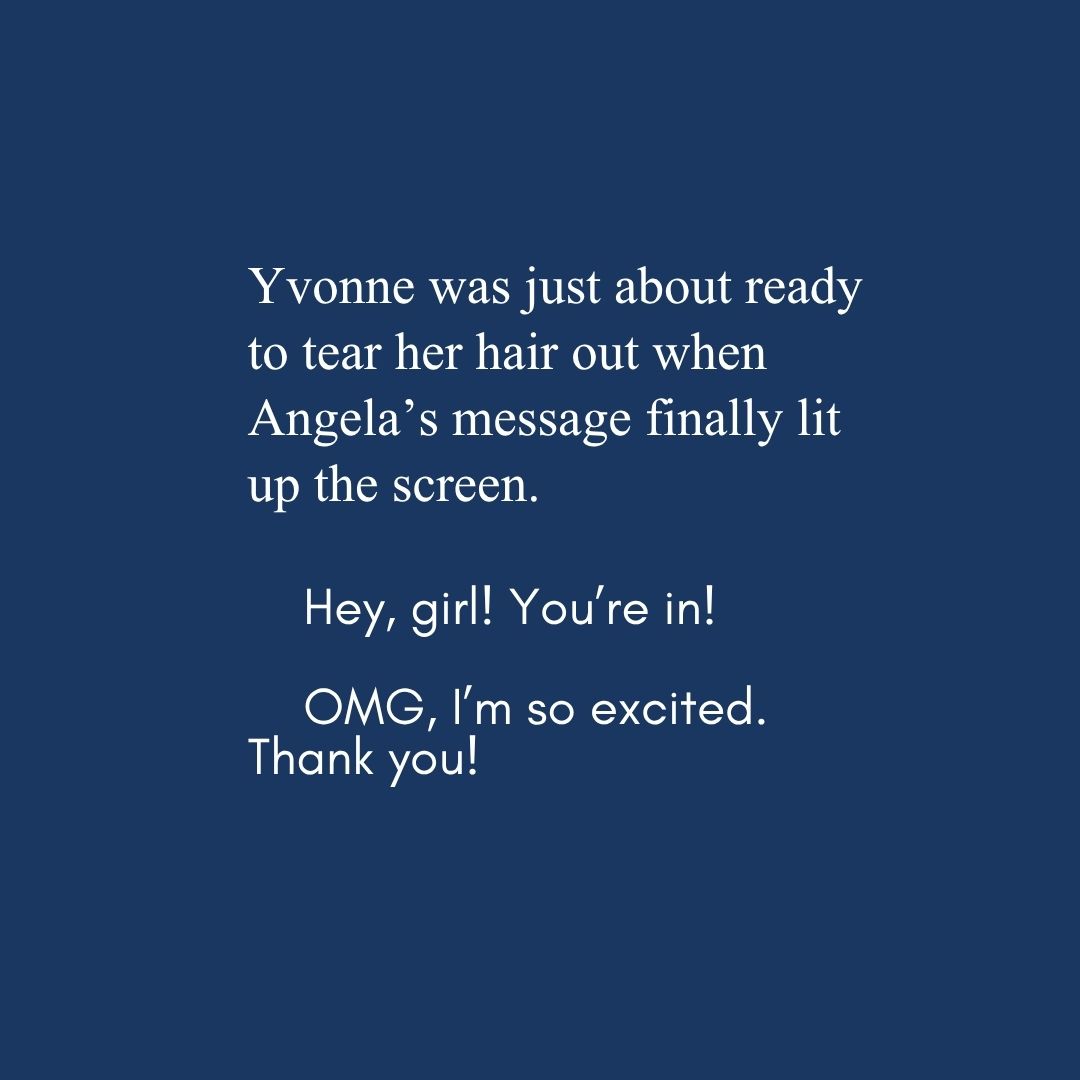
    Choose a different font

    If your characters are spending a lot of time communicating this way, you might want to use a clear visual cue to indicate a text message convo. Select a different font (a sans serif font helps to distinguish it from the rest of the copy while giving a nod to tech formatting) and set it off with indents. For example:

    tile showing text messages formatted with a different font and indents.

    Use formatting to indicate sent and received texts

    Think about how messages are displayed on your phone. The ones you send are aligned right and the ones you receive are aligned left. Some authors are choosing to replicate this format in their works, even placing them inside speech bubbles with dates and times for an authentic look. In this style, you might want to use names to indicate speakers, as you would in a play. For example:

    A tile showing two text messages aligned left and right

    Some authors – particularly young adult authors – might even like to work with a designer or illustrator to create a graphic treatment for texts.

    How to choose?

    Your choice of style to use will depend on a number of factors, including readability and budget.

    Some questions to ask yourself include:

    • Do you have long strings of text exchanges between characters?
    • Will you ever have more than two people in a text chat?
    • If you’re using names to discern who is sending the texts, how do you imagine them being read in an audio version?
    • What age group are you writing for?
    • Are you working with a designer/typesetter who can create a special design treatment for texts?
    • Is space an issue?
    • What’s your personal preference when reading this type of dialogue in fiction?

    If you’re only using the odd text here and there, italics might be all you need. But if text messages are a critical part of your characters’ dialogue, consider using a special treatment, even if it’s just a different font.

    You might like to try out a few different styles and see how they fit, and when you decide on one, ask your beta readers to give feedback on whether your treatment of text messages is clear and enjoyable to read.

    What about emojis?

    I love a smiley/winky/smirky face as much as the next millennial, but there are caveats to using these guys. Like fonts, emojis (that is, the little pictures, not the ones created with letters) are subject to copyright, so if you’re self-publishing, make sure to buy a licence or find a free version for your work. Also bear in mind that they won’t appear in colour in your printed book, which may lessen their visual appeal and impact.

    Another thing to consider is the possibility that they will date your book. Emojis are popular now but they may be considered cringe in a few years’ time, or their meaning could shift. It’s something to keep in mind if you’re concerned about your work’s longevity in the market.

    The verdict

    As long as you’re making text messages and who’s sending them clear to your reader, there’s no real right or wrong here. I lean towards using a different font or italics to indicate text messages in fiction and weaving in some dialogue tags and action beats to keep readers on top of who’s texting at all times. If you’re working with a copy editor, you can ask them if they can set up a special style in Word for text messages when working on your book to ensure you achieve both consistency and clarity. This will ensure they’re typeset differently to the rest of your text too.

    Ultimately, I love seeing creative ways of depicting technology in fiction and I’m excited to see how this evolves on the page. Futuristic novels that use not-yet-created technology? Even more fun!

    Want help formatting your book’s text messages? Get in touch for a sample edit.

  • Introducing the vocative comma

    This tiny piece of punctuation saves lives.

    One of the best things about punctuation is that when it’s used correctly it’s invisible in plain sight. It’s like driving a road you know so well that you get home without recalling the journey.

    But when it’s misused? Those misplaced commas, semicolons and dashes can be jarring!

    The vocative comma, however, is often completely invisible. That is, writers tend to leave it out of their sentences altogether. This can have disastrous implications for your characters!

    Allow me to explain. 

    What is a vocative expression? 

    Honey, sweetheart, darling, love – your pet names for your loved ones can be a vocative; so too their actual names. Any word you use to address someone directly is a vocative (also known as a vocative expression), whether it’s kind, disrespectful or neutral. Mate, sir, madam, prime minister … the list is endless! It’s how you use it that matters.

    For instance, in the sentence, “Hey, you!”, you is the vocative expression because that’s the word used as a direct address.

    Although you might not hear it in your speech, a comma is needed with a vocative expression in writing. In fact, it’s an incredibly powerful piece of punctuation.

    Consider the difference between these sentences: 

    “Shoot Pete,” the policeman cried. 

    “Shoot, Pete,” the policeman cried. 

    In the first example, without the vocative comma, Pete’s life is in grave danger! In the second, a vocative comma saves his life, showing us that the policeman is, in fact, directing Pete to shoot someone or something. 

    Similarly, the below sentence can take your story in a wild direction without a vocative comma: 

    “Eat children!” the woman urged. 

    Unless your story is exploring cannibalism, you’re going to need a comma with that: 

    “Eat, children!” the woman urged. 

    The comma makes it clear that the woman wants to feed the children, not feed on them.

    At its simplest, the vocative comma offers instant clarity. For example:

    “I don’t know Alison,” said Judy.

    has a completely different meaning to:

    “I don’t know, Alison,” said Judy.

    How to use the vocative comma

    Where you place the vocative comma depends on where the vocative expression lands in the sentence. 

    If the vocative expression starts the sentence, you need a comma after it (the vocative and its comma are in bold): 

    Kate, bring me that file,” Alice ordered. 

    Simone, is that your new bike?” Fred asked.

    If the vocative expression arrives at the end of the sentence, use the comma before the vocative. 

    “Give me my bag, you thief,” Ann said.

    “Where did you get that cool shirt, bro?” James asked.

    If the vocative expression is placed in the middle of the sentence, it needs commas before and after it. 

    “Well, Pete, you shouldn’t have fired that gun,” the policeman said.

    “Hello, darling, would you like a cup of tea?” Jenni offered.

    When does a vocative expression not need a comma?

    You don’t need a comma when the vocative expression is standing alone. Instead, you need a full stop, an exclamation mark, or a question mark. Here are some examples. 

    Pete! The policeman told you to shoot!” cried Mark. 

    Darling? Are you there?” Jenni called. 

    You thief. Bring me that bag,” Anna snapped.

    Embracing the vocative comma

    It can be easy to miss this one when you’re in the flow of writing, and in many cases most people will understand what you mean when you fail to add a vocative comma. It’s not actually life or death!

    But, using the vocative comma is a good habit to get into. Firstly, using punctuation correctly makes for clearer sentences and a seamless experience for your reader, allowing them to fully immerse in your world. And secondly, if you’re working with an editor, getting these little details right will save them time and you money.

    So, keep the vocative comma in mind when you’re polishing your manuscript – and see if you save any lives while you’re at it.

  • 4 signs you’re ready for a line and copyedit

    A simple explainer to help you work out if a line and copyedit is what your novel needs now.

    So, you’ve written a novel. Now what? 

    You might be thinking about starting the editing process, and perhaps you’re keen to work with a professional editor. That’s an excellent decision (wink!) but before you go ahead and book in your manuscript, it’s important to check if you’re ready for that kind of editing. 

    What is a line and copyedit? 

    When people think of editing, the line and copyedit is probably closest to what they imagine.

    A line and copyedit service involves a professional editor going through your work one sentence at a time. They’ll focus on grammar, punctuation and spelling, yes, but they’ll also finetune your sentences for flow, make adjustments to heighten tension or suggest changes to enhance character. They’ll ensure your book adheres to a consistent style and they’ll track details such as characters’ appearance or movements so that your scenes make sense. No coffee cups that magically morph into glasses of water; no Matthews turning into Michaels halfway through.

    It’s labour-intensive, detailed work that can take your book from good to great. But if you’re just getting started on redrafting and editing your novel, I’ll be honest: it’s unlikely you’re ready for this service. Going too early on a line and copyedit is like plastering over cracks in your home instead of spending the time getting the foundations right.

    Here are four signs that I look for that tell me you’re ready for this detailed form of editing.

    1 Your manuscript is structurally sound

    If you’ve already taken steps to ensure your manuscript is structurally sound – whether that’s working with an editor on a full structural edit or manuscript assessment, engaging professional beta readers or participating in an editing course like this one – that’s a great sign. 

    After taking in this feedback, you will have done significant work on your novel to make sure that the character arcs are strong and complete, the pace, POV and story structure are working for you and there are no glaring plot holes. You should be feeling confident about your overall narrative.

    A line and copyeditor will address small plot holes such as timeline hiccups or minor instances of head hopping, but they’re not able to resolve your big-picture issues at this stage. That’s because those overarching elements like plot, theme, character journeys, setting and POV can affect so many different threads of your book and issues with these will likely require significant rewriting. 

    2 You’re ready to embrace feedback

    In a line and copyedit, your editor will suggest changes to sharpen and elevate your writing. It’s not just about spotting typos! 

    Are you open to this kind of feedback? As an editor I take great care to ensure my feedback is sensitive and considerate, but if you’re not expecting this level of engagement with your work, it might come as a shock. Perhaps you’re too close to it – consider putting your manuscript aside for a while so you can get some distance and come back to it with a fresh perspective.

    One way you might be able to check if you’re ready to embrace this kind of feedback is to book in for a sample edit with your chosen editor. This will show you the kinds of issues your editor is likely to pick up and their style in relaying it to you, so you know what to expect. You might even find yourself looking forward to the process!

    3 You’ve done as much as you can 

    Think of this one as cleaning up for the cleaner. You can save yourself some coin if you do your own polishing on your manuscript before you send it out for a line and copyedit. 

    This means spending time on self-editing – reading over dialogue and sharpening up those action beats and speech tags, looking out for filter words or common phrases you use over and over, cutting back long descriptive passages that don’t move the story forward, and as obvious as it may sound, doing a basic spellcheck! Try doing two to three passes over your manuscript, focusing on tightening it up.

    Ideally, you’ll also format your file with double line spacing, indented paragraphs and page breaks for new chapters. 

    4 You’re going around in circles

    Constantly googling grammar questions and wondering why the answers are clear as mud?

    If you feel like you’re going around in circles and not getting anywhere, or making minor changes just for the sake of it, that’s a key sign you’re ready to hand your book baby over to a professional. You don’t have to do this writing thing on your own!

    A line and copyedit can be your saving grace, offering clear, sensible changes and suggestions that will elevate your story. Even better, while your manuscript is out for editing, you open up mental space for your next great book idea. 

    It sounds like a lot of work…

    I hear you – why put in all this effort when it’s going to be edited anyway? Well, the more work you do beforehand, the better shape it will be in for your editor, which equals a less expensive quote! 

    It also means that when your edited manuscript returns to you, it won’t be so littered with red mark-up that you immediately freak out. Instead, you’ll be able to concentrate on those helpful suggestions that enhance your writing and make it shine, rather than getting bogged down in the small stuff. 

    Plus, the more you polish, the more you’ll learn about writing craft, making you a better, more confident writer.

    Reckon you tick these boxes? Check out my line and copyediting services or contact me for a sample edit.

  • 5 gifts to give your WIP this festive season


    Slow down, chill out and experiment with your writing practice.

    Happy Holidays! It’s that magical time of year where we get to sit down, relax, stuff ourselves with treats and – if you’re a fiction writer – spend some quality time with your manuscript. 

    While showing up and writing is always a good idea, you might be in the mood to experiment. If you want to tap into that spirit of creativity that seems to hover nearby when you feel relaxed and happy, here are five ways to play with your words these holidays. 

    1 Interview your characters

    I love this writing practice for its ability to bring out greater depth in your cast of characters – and as a result, strengthen your novel. 

    It’s particularly useful if any of your characters are feeling one-dimensional on the page. 

    They may play an important role in the story arc, throwing up obstacles for your main character or helping them unravel a mystery, but who they are and why they act the way they do isn’t clear. 

    Or perhaps it’s your main character. You know they have a strong surface desire – they might want to fall in love or be married by 30 – but you haven’t fully explored the deeper desire underpinning that goal. The result is that readers might not connect with your character enough to go on that journey with them. 

    Interviewing your characters allows you to access hidden feelings, strengths, flaws, traits and more. 

    How to do it? Find a space where you can work uninterrupted for a while – around an hour. Then, start by throwing some basic questions at your character to get them talking. Where are they from? Where did they grow up? How many siblings? What colour is their eyes? How do they dress? 

    Then start throwing in some curlier questions. They might be directly related to your plot or characters (eg why do you dislike so-and-so, why did you make that decision?), or they might be more personal: What’s your earliest memory? What’s your greatest fear? What past hurt can you not forgive?

    You might be surprised what comes out and how it can take your novel to another level. 

    2 Read a (craft) book 

    Sometimes, you just need a break from writing. 

    If you’re lacking inspiration or wondering how to unravel a sticky spot or want to level up your writing skills, why not devote this holiday period to some writing theory instead of practice. 

    There are loads of great books on the craft of writing to explore. Some of my favourites are: 

    Big Magic by Elizabeth Gilbert

    Perfect if you need a gigantic shot of inspiration. Gilbert makes any creative task feel achievable in this guide.

    Eats, Shoots & Leaves by Lynne Truss

    Truss’s guide to punctuation is funny, interesting and informative. The trifecta!

    The Emotion Thesaurus by Angela Ackerman and Becca Puglisi

    Use this fantastic handbook to liven up your characters’ emotional responses in dialogue and action beats. Perfect if you find a character routinely groaning, blushing or biting their lip.

    Searching for the Secret River by Kate Grenville

    Grenville generously shares the story behind her beautiful novel The Secret River, from the family history that inspired the tale to the twists and turns it took in editing. 

    3 Go on a creativity date

    This tip is based on the artist date exercise in Julia Cameron’s The Artist’s Way, which is a 12-week program designed to get creative juices flowing. 

    I love the idea of taking yourself on a date to inspire creativity, and the holiday period is the perfect time to do it. You could visit an art gallery, have lunch solo, go to the cinema or walk in nature – it’s about finding an experience that will spark your curiosity. 

    To make it even more closely related to your WIP, imagine the experience through one of your character’s eyes. What would they order at the café? What kind of movie would they choose? What would be their favourite artwork at the gallery and why? How would they feel walking in the bush on their own?

    The idea is to be playful to unlock your creativity and bring unexpected ideas to the surface. 

    4 Try a different point of view

    Do you always write in the same close third-person point of view? Maybe you love the intimacy of first-person stories.

    There’s no right or wrong, but if you’re feeling stuck with your story you might want to flip the POV to see if that helps to address a stagnant pace or brighten up a sluggish mid-section. 

    You don’t have to commit right now – this is about experimenting. Try rewriting a scene or a chapter in a different POV, whether it’s going from third to first person or swapping from one character’s perspective to another’s.

    It’ll feel unfamiliar at first, maybe even a bit ick. Push through and notice what comes out in your story as a result – perhaps more insight into a character, perhaps a lighter, brighter voice. It could unlock a whole new perspective on your novel and your writing style. 

    5 Create a style sheet

    Think of this as life admin for your WIP. 

    A style sheet is a document that keeps track of the world inside your novel, from the nuts and bolts of specific spelling decisions to the traits of characters who inhabit your story. 

    It’s a great consistency tool, because it allows you to quickly check those finicky details, like if you use OK rather than okay, if your character’s eyes are blue or green, and if you use italics or quote marks for thoughts. 

    You can create your own style sheet easily in Word, listing your world-building decisions under categories such as ‘settings’ and ‘characters’ and spelling and punctuation choices under alphabetical subheadings (for example, an entry such as quotation marks: single, double within would fall under Q).

    This is especially important if you’re working on a series, as it helps you maintain consistency across books, and it’s great for speculative fiction, which often has a long list of world-building rules to keep up with.

    If you team up with an editor on a copy and line edit, they will create a style sheet for your work (I provide authors with a comprehensive style sheet when I return their copyedited manuscripts). And if you’ve already created your own, you can pass it on to the editor or proofreader for their reference as they work on your novel – they’ll love you for it! 

    I hope these ideas help you get your creativity firing these holidays! Let me know in the comments which of these writing practice gifts have been most useful for your WIP.