pencarroll@gmail.com

  • What is an author-sensitive editorial approach?

    A note on my editorial values.

    I understood their concerns completely, and I reassured them that their worst-case scenario was very unlikely to come true – with me as their editor, at least. The conversation got me thinking about my editorial values and why I’m so passionate about identifying as an author-sensitive editor.

    I can’t take credit for this terminology – I first heard it when I was learning about structural editing from the wonderful fiction editor Nicola O’Shea. But the concept resonated deeply with me and I knew instantly that this would inform my approach as I set up my editorial business.

    What is it?

    An author-sensitive approach means that I consider the author’s feelings and experience with every edit I make. 

    It’s not about pandering or going soft on an author who can’t hack constructive criticism. Rather, it’s about remembering, always, that being invited to share feedback on someone’s work – especially when it’s a manuscript that’s taken many weeks, months or years to write – is a privilege. 

    Opening yourself up to feedback is a big and scary step, but an essential one. And it deserves to be treated with care and respect. 

    My experience

    I know exactly how intimidating it can feel to share your hard work with others because I’ve been there.

    As a journalist, I’ve had many people critique my work. Not all of their feedback could be described as sensitive! 

    In a busy newsroom, editors and subeditors will slash your copy with a red pen or tell you straight up that your work isn’t good enough. There’s very little time to be gentle when a newspaper needs to go to print. I entered this world as a fresh-faced and eager but very thin-skinned 19-year-old cadet journalist, and let me tell you, it was a steep learning curve. 

    Later, working in magazines, I learned that even though you might have a great idea for a story, if you can’t illustrate it, it’s dead in the water. That your voice is never more important than the magazine’s tone and style. And if you don’t get the words right the first time, you might not get another chance to rework your draft. Instead, the subeditor will do that for you. Because: deadlines.

    I also learned that listening to feedback, whatever the delivery style, is the fastest way to develop as a writer.

    All this to say, I completely understand what authors go through in sharing their work with editors and I have enormous respect for anyone willing to be vulnerable enough to do so, knowing that their story will be stronger for it. But if I can make that process an enjoyable one for authors, I absolutely will

    My experiences as a young journalist might have helped me toughen up and get used to receiving feedback, but honestly, I don’t think that I’m better for the harsher critiques. It was the mentors who took the time and care to guide me gently towards better writing who I learned the most from. And as an editor myself, I’ve seen over and over again how a respectful, collaborative and sensitive approach can make an author feel excited and inspired to get stuck into their next draft. 

    To put it simply, I just don’t believe that tough love or shaming are the ingredients that creativity needs to flourish. 

    My editorial values

    So, what does an author-sensitive approach look like? For me, these four values guide my work, whether it’s a structural edit or a line and copy-edit. 

    Respect for craft: Writing a novel is a huge undertaking. I have enormous respect for anyone who has been able to sustain their inspiration for the marathon that a fiction manuscript demands, and for the craft of translating their ideas into a story. This level of dedication and skill deserves to be celebrated.

    Positive feedback: I always highlight what an author has done well, whether it’s a beautiful turn of phrase, excellent dialogue, fine-tuned pacing or deep characterisation. I see your efforts and I applaud them.

    Gentle suggestions: The author is always in control of their story, so I frame my feedback as suggestions, not demands. If it doesn’t resonate with you, no problem. Often, my suggestions will act as a springboard to your own solutions. The idea is to inspire your creativity, not stifle it.

    Empowerment and encouragement: If you’re waiting for me to give you a verdict on whether you can write or not, or whether you should give up writing and go back to your day job, forget it. I don’t do absolutes and I don’t offer judgements on your inherent talent (I’m all about a growth mindset here!). What I will do is highlight your strengths and show you what areas you need to work on, because I believe good writing is something that people can and do learn. I’ll encourage you to keep going and I’ll empower you to work on the next steps yourself, because this is your story. As your editor, I’m your cheerleader!

    Is an author-sensitive approach for everyone? 

    For some people, my approach might feel too soft and gentle – they just want the feedback, and they don’t need the frills! I get that too, and that’s why I really recommend having a chat before booking a service with any editor, so you can see if you gel. Editing is an investment, so you want to make sure you feel confident and comfortable with who you’re working with. 

    One other thing I’ll mention: as part of my author sensitive approach, I want to deliver my edits in an accessible way. So if you’d prefer your structural editorial report delivered as an audio file rather than written material, for instance, I can do that. I can also change the colour of my mark-up in Word if there’s a colour combo that’s better for you visually. I’m open to feedback here, so whatever you need, just ask and I’ll do my best to make it happen.

    If you like the sound of my author-sensitive approach, I’d love to chat with you about your fiction manuscript. To get the ball rolling, drop me a line here.

  • Samantha L. Valentine is writing it like it is

    The Meet Me in Berlin author on why realism is essential for a great romance.

    It’s the most romantic premise: two lovers from opposite sides of the globe vow to meet in the same place at the same time every year if they should ever lose one another. It’s also pretty unrealistic, which is why Sam Valentine says she made sure the rest of her new novel, Meet Me in Berlin, was unflinchingly true to life. In this contemporary romance, Casey, a British art curator, and Holly, an Australian photographer, grapple with grief, infidelity and heartbreak on their way to their HEA.

    That’s not to say Meet Me in Berlin is a heavy read – it’s balanced with plenty of laughter and spice too, which made working on the copy-edit earlier this year a real joy for me. 

    This is Sam’s second novel – her first, Normal Functioning Adult, has just been re-released under her own publishing company – and her work has also been featured in the Romance Writers Australia Sweet Treats anthology. As Meet Me in Berlin hits shelves, I asked Sam to share her thoughts about writing realistic characters in romance, the diversity missing from Australian fiction, and why she recently made the switch from hybrid to indie publishing.

    This is a long read but a really juicy one as we explore some topical issues – grab a cuppa, settle in and enjoy! 

    Sam, it was so lovely to to work with you on Meet Me in Berlin. Can you share the story behind this book? What inspired it?

    It was mid-March 2022 when I first had the idea for this book, which came overnight! I wasn’t sure what was happening with Normal Functioning Adult (my first novel), and I was a bit down about receiving yet another rejection. A writer I was friendly with at the time had just started indie publishing short romances and suggested putting NFA to the side and trying something else – maybe writing a romance to indie publish. Immediately, I grabbed a notebook and googled Shakespeare plays for plot inspiration. Somehow The Comedy of Errors gave me the idea (I think it was the accidental meeting after a lifetime apart bit) of two people meeting, losing touch and looking for one another years later in a foreign city. I think the wedding shambles from Much Ado About Nothing gave me the idea of someone running from a wedding. The following day in my lunchbreak at work, I combined those ideas, scribbled out a basic plot and started writing that night. Ten days later, I had a very rough 38,000-word draft and it grew from there, taking a good year or so to complete.

    Other than getting the initial idea from a couple of Shakespeare plays, the events of the novel really weren’t inspired by anyone or anything – it’s all fiction – but the idea of ‘if we lose each other then we’ll return to this spot, on this day, at this time every year until we find each other’ was so unrealistic to me (yes, my own idea was unrealistic to me), I was inspired to make the rest of the novel as true to life as I could to make that concept believable. 

    Both your lead characters work in the art world and there are a couple of paintings that become meaningful for Holly and Casey. What role does art play in your life?

    Art and photography (how they feature in the novel) don’t play much of a role in my life at all. My wife is quite a good artist (drawing and painting), and we’ll go to exhibitions now and then, but I really don’t know a lot about paintings or the art scene, and I know even less about photography. 

    I stumbled upon Italia und Germania and Sappho and Erinna (the paintings referenced in the novel) when I was looking for art that suited the plot and characters, and I thought both worked well with the storyline, so I found ways to work them in. I also discovered a UK art podcast called The Week in Art, which I listened to every week while I was writing the novel, and I found a good photography podcast too. I still listen to the art podcast each week – it’s my comfort listen when I’m grocery shopping. I also love that my cover designer (who reads every novel she designs a cover for) modelled the illustration of Holly and Casey on the Sappho and Erinna painting and a scene in the book where they take a photo of themselves in a similar embrace.

    What did you find most fun or interesting about writing Meet Me in Berlin?

    It was a fun novel to write! Revisiting London and Berlin (virtually) was great, particularly London as I lived there for eight years and have such fond memories of that time. I even snuck in a street reference where I lived for a few years (Cruden Street in Angel). It was also fun to write a character like Casey who is very different from me – a mixed-race woman from East London. I did quite a bit of research to write Casey, which was interesting and insightful, particularly a book I read called Biracial Britain by Remi Adekoya. I liked writing British characters in general, too, as I did my linguistics degree in London and studied British English and English dialects, and my wife is British (not from London) so she likes that the novel features British characters. Making a silly concept like ‘if we lose each other, then we’ll come back to this spot, on this day, at this time, until we find each other’ realistic was also fun (and a bit challenging).

    I loved the way both characters deal with quite difficult circumstances and you don’t shy away from depicting morally grey actions, which we don’t always see in romance. I think it’s a great way to illustrate the growth of your characters. What made you want to lean into a realistic take rather than an idealised one?

    I’m not sure it was a case of wanting to – it’s just my style as a storyteller. I generally always write stories with a realistic take, but they’ll also have sprinklings of idealism, or at least convenient plot events to give a story a happier spin. Maybe that comes from growing up on fairytales, which are fantastic for conflict, flawed and morally grey characters, villains, dark themes, but also happy endings, satisfying character growth and positive coincidences. I’m a fairly down-to-earth, authentic and practical person and this probably comes through in my writing. That doesn’t mean I am my characters, of course, far from it, and I intentionally work hard to make my characters very different to me (my stories would be very boring if they were based on my life and I only wrote what I knew). So flawed characters who make questionable decisions (not necessarily always morally grey) will likely feature in all of my longer stories (maybe even my short stories, too — my RWA Sweet Treats anthology story certainly isn’t idealised and it will hopefully stand out for that reason). 

    Obviously there’s nothing wrong with idealised romances if that’s what people enjoy reading or authors like to write, but to me, fiction is an art form and art reflects society. Do we live in an idealised society? No. Is love and romance always idealistic, perfect and puritan? No. At its core, romance is about relationships, so it makes sense that it would contain realistic elements involving human actions and emotions. Humans are messy and flawed, their actions often a result of deep-seated wounds or their life experiences. Love and relationships can be complex and complicated. So why not show all of this in fiction as a depiction of contemporary life? That said, at the same time, novels are also great for escapism and relaxation and getting lost in other worlds, and this is where adding those idealistic elements, like happy endings or coincidences that wouldn’t actually happen in real life can help.  

    Love and relationships can be complex and complicated. So why not show all of this in fiction as a depiction of contemporary life?

    It’s interesting to me that there’s often this expectation in contemporary fiction, mainly women’s fiction and romance, that novels mirror modern society in terms of what characters do, say and think, but when a book has flawed, morally grey characters and actions that would actually happen in the real world, it’s often not well received. That seems very contradictory to me. I’ve even had a beta reader of another story tell me my character couldn’t think something because they were judging another character! To have a character only act and even think in a certain way is preposterous. 

    So far, I’ve received some really great reviews and feedback for Meet Me in Berlin, which is wonderful, and quite a few readers have commented how much they like the flawed characters. So I think generally readers do like reading about conflict and complicated actions. However, I’ve also received some not-so-great reviews, which is fine, that doesn’t bother me so much, and readers can dislike books and review however they want. But the content of some of these reviews has surprised me, which ties into the idealised view of romance books and morally grey characters. 

    In the case of Berlin, this relates to infidelity. Firstly, novels aren’t manuals for life. It’s not a novelist’s job to set the world to rights with their stories. Stories need conflict and how the plot unfolded around this topic in Berlin created the perfect conflict, both external and internal. Secondly, the way it pans out is very realistic. So many people become unhappy in relationships, even when they’re about to get married, but don’t know how to leave and end up doing something stupid as a way to get out of the relationship. People also fall for other people when they’re in relationships – it happens! Is it a hurtful, shitty thing to do? Of course it is, but I wasn’t going to turn my fictional story into a non-fiction moral compass on fidelity – who am I to tell people how to manage their relationships? I’m an author making up stories – the characters aren’t me and their story isn’t mine. I’ll also say that I’m purely talking about character flaws and morally grey actions here; I don’t think filling a book with hateful content or behaviours towards certain groups for no reason under the guise of fiction is okay.

    You’ve also said you want the world to read more diverse Australian stories. Why is that important and what do you think is missing from Australian literature?

    I don’t believe Australian fiction is nearly as diverse as people like to think it is, and I’m not sure it’s improving much either. I’ll focus on the Australian lesbian/sapphic space because that’s my area. I could count on one hand (maybe two) the traditionally published adult lesbian/sapphic novels that have been produced in this country in the past few years. There has been a small increase in lesbian/sapphic romances (of varying subgenres) overseas, and there are some Australian own voices authors with international publishers, mostly romance authors as well. But sapphic women are more than coming-out stories (which is often a YA story) and romance! 

    I see Australian agents and publishers seeking ‘diversity’, yet their actions don’t appear to support a lot of diverse fiction, because in reality, it’s about business and markets. 

    I also don’t like this notion that queer stories have to be happy ones (like YA and idealised romance). Queer women do all the things heterosexual women do – they work, get divorced, have families, grieve, have addictions, lose people, take drugs, have mental health issues, struggle with life, have affairs, get into debt and so forth, so where are these stories with lesbian characters? They’re certainly not being published by Australian publishers and I doubt it’s because they’re not being written. 

    Both Normal Functioning Adult and Meet Me in Berlin were taken seriously by big five publishers, but NFA was turned down because they didn’t know how to market it (it’s just women’s fiction but features gay women – it couldn’t be marketed alongside other women’s fiction?) and Berlin was turned down despite the publisher loving the book because apparently the market is saturated with rom-com type novels (although it’s hardly saturated with Australian sapphic rom-coms) and retailers only want the big-name authors at the moment, i.e., authors big on BookTok. So Australian publishers and agents can scream diversity all they want but at the end of the day it doesn’t trump markets, and until it does, we won’t see an increase in Australian traditionally published diverse fiction. 

    Sapphic women are more than coming-out stories and romance! 

    This is why indie publishing is popular for lesbian and sapphic fiction, because it really is the only option for so many of us. I also see a lot of people saying ‘it’s better than it was’ or ‘there’s loads of LGBTQ books now’ because queer YA is becoming more popular globally, which is great, but YA is just one genre and it’s very different to adult lesbian fiction, so it’s frustrating when people lump the entire community into one basket. Also, so many people get their books from walking into bookshops, Big W or the library. They won’t find indie published or small press digital-only books in there, so they’ll continue to never know such stories exist.

    I also see a lot of binaries in fiction – books are gay or straight, black or white, male or female, there’s very little middle ground. Something that hasn’t yet been picked up in Meet Me in Berlin by any reader and that was intentional on my part, is the blurred binary theme running through the novel – Casey is biracial, Holly is bisexual, and Dante (the wedding planner) is non-binary. Something small, but it was me saying not all fiction has to fit into a binary. 

    Let’s talk about the publication journey. Your first novel, Normal Functioning Adult, was with hybrid publisher Shawline, but you’ve since switched to indie publishing. Was working with a hybrid publisher a good training-wheels step?

    Yes, I think so. At the time of deciding to go down this path, thinking about indie publishing and doing all the things I knew I’d have to do to get a book out there was too much for me to get my head around. I knew the costs involved in getting an editor, cover designer etc., and the time it would take me to indie publish, so I went with a hybrid because the outlay was about the same. While it didn’t end up being the right path for me, it gave me the opportunity to get my novel out into the world, build an author platform, learn more about publishing contracts and processes, meet some new authors, and I made a great friend (another Shawline author) that I am so grateful is in my life now. 

    Also, the timing of everything worked out well because I was able to align the republication of Normal Functioning Adult with the release of Meet Me in Berlin meaning I could use the same cover designer, which has been great for branding, and I created a business name to publish under so I was able to coordinate this across the two novels and get the same designer to create publishing logos for me, which appear on the spine and in the front of the both books. 

    So I feel like the way it all worked out was all meant to be!

    What are the upsides to indie publishing?

    Being able to source my own cover designer, editors, proofreaders, and set my own release dates has been great. I’ve also really liked being able to do my own typesetting and being able to update my manuscript so easily if there’s an error or issue. Higher royalties are also an advantage.

    What do you find challenging? Do you have any advice you can share with other authors?

    Indie publishing has been challenging because there is so much to do, and just getting my head around all the things has blown my mind a bit! Although getting two full length novels ready to indie publish at the same time was a bit full on – I don’t recommend doing that. Dealing with Ingram Spark, Amazon etc has been tricky. My advice for those who’d like to indie publish is to set yourself a release date that gives you plenty of time to do everything you need to do. Then start looking into indie publishing, the different options and platforms, make yourself a plan and away you go. Think about editors and cover designers ahead of time because the good ones are often booked up months in advance. If you have a Mac, invest in Vellum (typesetting software) because it will save you a stack of money in typesetting fees (I bought it at a reduced price on Cyber Monday). There’s also quite a few good indie publishing Facebook groups and look at other indie authors to see what they’re doing.

    What’s your experience of the editing process like, having been through it a few times now for your books?

    So far I’ve had good experiences with editors, so I’ve been lucky, and I enjoy sending my stories out for editing feedback. I’m okay at editing my own stories, too, since I did editing in my Master’s, and I also did the Cut, Shape and Polish course through Australian Writers Centre, which I found really helpful for reviewing my own novels. But there’s always a layer of subjectivity when self-editing so I like to send my work out to someone else to edit.

    My advice for those who’d like to indie publish is to set yourself a release date that gives you plenty of time to do everything you need to do.

    Can you share any insights or aha moments that came to you during the editing process?

    For the developmental edit I had for Meet Me in Berlin, it was interesting to have another person’s view of the characters and plot because often editors will see what the authors can’t. Sophia, my developmental editor, gave some great recommendations to shape the novel, and I changed quite a few scenes from that edit. It was also interesting to have a different perspective on the characters. The description that is in the blurb about Casey, that she ‘works hard, plays hard and loves hard’ comes straight from Sophia. Although I’d spent a year writing Casey before sending the novel out for edit, I had never thought of her in those terms, but it was the perfect description for that character. 

    Your copy-edit was also an eye-opener because I had no idea how much I used certain words and action beats, and there were so many sentences that I wasn’t happy with, but I’d read the novel that many times it got to the point where I just couldn’t think of alternative phrases or words, so the copy-edit really helped with that. And picking up my Terry’s Chocolate Orange error was brilliant! [Note: A helpful thing that editors can offer is fact-checking! In this instance I double-checked a reference to this chocolate’s packaging and corrected the colour of the wrapper for Sam.]

    What stage of editing do you find most helpful?

    I find them all really helpful. A structural edit is great, but it often results in a stack of rewriting and reworking characters and plot! Copy-edits are great because you feel like you’re closer to finalising and it helps clean up all those clunky sentences and repetitions. Proofing is also good because by that stage you’ve read your own novel that many times that you think there couldn’t possibly be any mistakes, but there always is and I’m always interested to see what my own eyes missed.

    I know you work full-time, so fitting writing in must be tricky! How do you stay on track with your writing goals?

    I certainly had to give things up in order to write, like TV. Other than the news and a few shows here and there, I barely watch TV anymore and that gives me a lot of more time to do writerly things. To fit it all in around my day job, I mostly write/do author stuff in my lunch breaks (it’s amazing how much you can get done in a 45-minute lunch break if you focus), evenings, weekends and holidays. I don’t much else in my spare time – I hang out with my wife and dogs and see family and friends, but otherwise I’m usually doing author stuff of some description. 

    After a big push to release two books this year, what’s next for you?

    I have a few stories sitting there I’m planning to get back to. I’m starting with a short story I wrote last year that I’d like to extend into a longer short story and publish as a digital-only release, possibly for Sapphic September. It’s a light-hearted, fun, contemporary romance (at this stage anyway, that could change!). I’d say it’s a fish-out-of-water trope.

    Finally, Sam, what would you like your books to be known for?

    I like the idea of my books being known for something that’s just a little bit different, like romance that has a bit of edge and grit, or engaging women’s fiction that features diverse characters. Regardless of the genre, I definitely would like my books to be known for being authentic stories with real-life themes and storylines that feature flawed, realistic characters. 

    Find Sam’s books and sign up for her monthly newsletter via her website. You can follow Sam on Instagram, TikTok, Facebook, Goodreads and Amazon.

  • Who’s talking? Finding the right point-of-view character for your scene

    Hands up if you’re writing a dual or multi-POV novel? It’s a really popular format for commercial fiction, and it offers loads of benefits for authors: you can give the reader deeper insight into your characters and give yourself greater scope to reveal plot points. But one stumbling block you might come across along the way is working out which character should be telling the story in critical scenes.

    It can be a tricky decision to make, especially when you have two (or more) protagonists whose growth and journey is equally important to the overall narrative arc and the themes you’re expressing. That means it’s likely that the major events of your novel will be important for all characters! So, who should get to tell the story in those moments?

    All of them! I hear you cry. While that might work for you creatively, it’s not always a great outcome for the reader – seeing the same moment from multiple perspectives can be a little tedious. Instead, if you do want to have more than one character’s experience of a particular plot point on the page, it’s a good idea to show the big moment from one perspective and then let another character pick up just after the incident occurs, to keep the story moving forward.

    So, how do you find the most powerful POV?

    Here’s what I recommend: Choose the character who has the most at stake.

    Ask yourself, who has the most to lose (or gain) from this pivotal plot point? It’s their reactions and emotions as they face this hurdle that will give you the most to play with – and that will resonate most strongly with your reader.

    Look closer

    Maybe you didn’t think too hard about which character told which part of the story when writing your first draft. You got into a rhythm and switched POV at each chapter, or got comfy staying in one voice for a few chapters at a time. That’s fine – it’s great to just get the words on the page. When you’re doing your first edits, however, keep POV in the back of your mind as you assess your story’s pace and dramatic impact.

    If you feel that the critical points of your novel are falling flat and failing to hit the emotional stride you were aiming for, check the POV. Is the character with the most to lose telling the story in that scene? Or is it another who has less at stake, and is acting more as an observer? Try rewriting the scene through another character’s eyes to see if that helps raise the drama and tension.

    Equal opportunity

    Maybe the scene has equally high stakes for all of your POV characters – for instance, if you’re writing a dual-POV romance, both protagonists might be equally affected by a conflict that arises in their blossoming relationship; in a mystery novel, more than one character could easily be impacted by an important clue coming to light. In that case, think about who these characters are and how they respond to significant events. Would they appear calm in the face of crisis but fall apart internally? Do they wear their emotions on their sleeve? Are they trying so hard to keep everything together that they’re at the point of breaking? Of these, which character would give you the most to play with, emotionally speaking? Which character’s reaction style best reflects the themes of your novel? And how would their reactions – both internal and external – appear on the page?

    There’s no right or wrong answer here but considering these factors as you refine and polish your story can help you play around with the dramatic tension in your work – and lead to a more impactful experience for your reader.

    If you’d like support wrangling your multi-POV novel, I can help! Get in touch to chat about structural editing or manuscript assessments.

  • “I really want readers to fall in love with every character” – Emma Mugglestone on writing a small-town romance series

    Emma Mugglestone

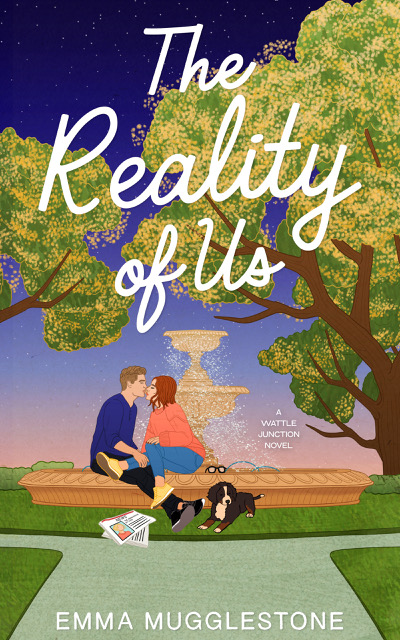
    Meet Emma Mugglestone, author of the gorgeous new small-town romance novel The Reality of Us.

    One of the best things about editing is getting to read great books before everyone else. The flip side is that after working on the structural edit for Emma Mugglestone’s novel The Reality of Us earlier this year, I’ve had to wait patiently for everyone else to read it too! Thankfully, the wait is over. It’s out now, and if you love small-town romances, an opposites-attract vibe and plenty of spice, you’re in for a treat. 

    The Reality of Us is Emma’s first full-length novel and the first in a series that follows four brothers in the fictional regional Aussie town Wattle Junction. It’s already won hearts – and awards – well before release: in 2023 it took home the Romance Writers of Australia’s Emerald Award for an unpublished manuscript and the US-based League of Romance Writers Emily Award for contemporary romance.

    The series kicks off with Owen, a disillusioned big-city lawyer who has just moved back to his home town of Wattle Junction to establish a law practice he can be proud of. He’s not back long before he runs into Alice, a reality TV star whose picture-perfect life has just come crashing down in spectacular style.

    Here, Emma shares how she got into writing, why she chose the indie publishing path, and the irresistible pull of a series set in a small town. 

    Congrats on the release of your novel, The Reality of Us! How long have you been dreaming of this moment? 

    Thank you! I’ve been working on my Wattle Junction series since 2019 with a few false starts so to finally be releasing the first book in the series is so exciting. 

    Tell us about yourself and your writing journey. Where did it all begin for you? 

    Several years ago, I fell in love with romances and after reading across different sub-genres, I started to wonder if I could write one as well. My ‘gateway book’ into romance was Jasmine Guillory’s The Wedding Date and it’s still one of my all-time faves.

    When my kids were little I stayed at home and had the best time ever with them but once it was time for kinder and school to start, I knew I didn’t want to go back to my old career of advertising/administration and I’ve always loved reading and writing, so I figured I’d give it a go. 

    Can you tell us a bit about Owen and Alice’s story? 

    The Reality of Us is a spicy, small-town, opposites-attracts romance set in Wattle Junction, a fictional town west of Melbourne. At its core, it’s about learning to trust yourself and being open to new beginnings – including love.

    The Reality of Us is the first full-length novel in a series you’re planning based around the small fictional town of Wattle Junction. Why did you decide to embrace the series format? 

    There are a few reasons. The first is that as a reader, I love a series. Getting to fall in love with side characters who eventually get their own books is *chef’s kiss*. And I’m always happy when previous main characters reappear and you get a glimpse into what their life is like post their own HEA.

    The first full-length novel I wrote was Owen’s eldest brother Rafferty’s story. It’s a second-chance romance with a criminal investigation sub-plot that will eventually be released as the final book in the series. Once I finished drafting it and I was thinking about what I’d like to write next, I struggled to leave the idea of Wattle Junction behind and then realised that I didn’t have to because Raff had brothers! Given that Raff and Cassie’s story has the biggest climax, though, they got shifted to the end of the series. 

    I love the way you brought Wattle Junction to life as a small Australian town with a vibrant community. Do you have a country or small-town background yourself?

    I’ve never lived in a small town like Wattle Junction but I did grow up in Cairns in the eighties so it was a little similar. Small-town stories have always appealed to me though and Gilmore Girls will always be a fave show. 

    This novel has already been super successful – it’s won two awards before it’s even been published! How did it feel to take home not one but two big awards?

    Honestly, I’m still surprised that The Reality of Us won The Emily and The Emerald. Not because I don’t think it’s a deserving winner (excuse the humble brag!) but because I know how magnificently talented the other nominees are. It’s exciting to know it was well received and the story resonated with all the judges.  

    “When I first started writing seriously, I told anyone who would listen that I had no interest in self-publishing because it sounded like a lot of work. You know what they say about never saying never …”

    You’ve chosen to self-publish your Wattle Junction series. What drew you to indie publishing? 

    When I first started writing seriously, I told anyone who would listen that I had no interest in self-publishing because it sounded like a lot of work. You know what they say about never saying never … And, while it is a huge amount of work and a very steep learning curve, it suits my lifestyle right now and I’m eager to start sharing my stories with the world.  

    What advice would you give other authors who are considering self-publishing?

    I attended the Romance Writers of Australia conference earlier in the year and Steffanie Holmes gave an absolutely magic keynote speech about not quitting before the miracle. One thing that really resonated with me was her advice that you can do anything, but you can’t do everything and I’m applying that to self-publishing. It helps to be honest with yourself about what your strengths and weaknesses are. I’m not a very quick writer so I wanted to make sure that I had at least two of the other books from the series drafted before I released The Reality of Us. I’m a little behind on this goal but that’s okay. Hopefully I can catch up and if not, the beauty of indie publishing is that I can shift my deadlines around if I need to. 

    I loved working on the structural edit for this novel earlier in the year. I know editing can be a bit of a nerve-wracking experience for authors – how do you feel about the editing process? 

    I know I always end up too close to my stories so, while sharing my work is still anxiety inducing (with anyone, not just editors), it’s an integral step to ensure the story shines as brightly as it can. And the feedback is always so incredibly helpful. I’ve also been very lucky to work with editors who are supportive, kind and look after my characters and stories as if they were their own. 

    “Editing is an integral step to ensure the story shines as brightly as it can. And the feedback is always so incredibly helpful. I’ve also been very lucky to work with editors who are supportive, kind and look after my characters and stories as if they were their own.”

    Were there any takeaways or lightbulb moments from your edits that you could share? 

    So many things. That no matter how many times I read the manuscript and self-edit I’ll miss things and a fresh set of eyes and opinions is truly invaluable. Also, it’s essential to find the right editor who ‘gets’ your story and writing style. 

    Aside from editors, who else is essential on your publishing team? 

    I’m so lucky to have a group of wonderful writing friends who beta read my stories and give me constructive feedback and advice. It’s truly invaluable. I’ve also done several writing courses through The Australian Writers Centre and Romance Writers of Australia. 

    One of the highlights for me working on your novel was your skill with characterisation. Even the supporting characters were richly drawn and gave the novel so much heart.

    I really want readers to fall in love with every character in the story even if they’re only on a few pages because the best thing about small-town romances (in my opinion) is the people who live there. They drive the stories and give them so much depth. I’m also conscious that I tend to have quite a lot of characters, so I try to make sure they’re all there for a reason and readers know who is who. And finally, because The Reality of Us is the first book in the series, several future main characters are also being introduced. 

    “The best thing about small-town romances (in my opinion) is the people who live there. They drive the stories and give them so much depth.”

    Speaking of characters – readers might notice the dog on the cover of this book! Murphy the Bernese mountain dog is such a great character and plays a key role in Owen and Alices story. Are you a dog lover and what was it like writing a furry character with a big personality? 

    How cute is Murphy on the cover? I’m so in love with him. I am a huge dog lover and have always grown up with them. Now my family and I have two Chesapeake Bay retrievers named Bear and Artie and I’m planning on including a dog in each story of the series. I especially wanted Murphy to be an impractical breed choice for apartment-living Alice to highlight how she often fails to consider everything when making a decision (like the fact she has no idea what a Bernese mountain dog is and decides that if his breed includes mountains in the name he’ll love running in the mountains with her). And I loved the idea of him being an unruly puppy to throw some tension between her and Owen. 

    What do you find the most challenging – and rewarding – about writing? Do you have any tips for surviving a tough day on the tools?

    I’m not a fan of the first draft because even though I know it doesn’t need to be – and can’t possibly be – perfect, I’m always impatient to get to the stage where it isn’t such a mess. I once heard the first draft described as gathering sand and that second and subsequent drafts are when you can make your sandcastles. I’m constantly reminding myself of that during the first draft. 

    My husband always says to me “they can’t all be diamonds” and that’s what I remember on the inevitable days where the words just won’t come, or I don’t hit my goals. It’s all a learning curve and while I’d rather not leave things unfinished, learning to recognise when I’m just spinning my wheels and getting frustrated has been a game changer. Now I try to step away for a bit, take the dogs for a walk or read or watch something. 

    What would you like your stories to be known for? How do you want us to feel after spending time in the Wattle Junction world? 

    I want every reader to recognise a little bit of home in Wattle Junction, whether that’s from the family dynamics, the small-town vibes, the way the community rallies together or the friendships. 

    When can we expect the next book in your Wattle Junction series? 

    Nate and Eloise are up next in The Story of Us and it will (hopefully) be released in June 2024. While the central themes of the series (learning to believe in yourself and being the best version of yourself) still feature heavily, their story feels softer and sweeter to me. It’s about noticing and finding love in all the quiet, little moments that often get overlooked. 

    Finally, what are you reading now?

    I’ve been dipping my toe into the world of romantasy (I’m normally quite a staunch contemporary romance gal) and like the rest of the world have been reading Fourth Wing and Iron Flame. After I finish those, I’m diving straight into Christmas romances because they combine two of my absolute favourite things!

    Follow Emma Mugglestone on Instagram and TikTok @emma.mugglestone and pick up a digital or paperback copy of The Reality of Us here. You can also grab a free ebook of the prequel novella Wattle It Be? here.

    Interested in a structural edit for your WIP? Get in touch for a free discovery call.

  • How to format text messages in fiction

    A woman standing in front of a window looks at her phone screen as though reading a text message.

    An easy guide to depicting dialogue as text messages in a contemporary fiction novel.

    Text messages are a part of everyday life so if you’re writing contemporary fiction there’s a good chance you’ll want to include a few in your story. But how do you format them? Should you use quote marks? Do you need to indicate the sender with a name or dialogue tag? What about emojis?! 🤪

    There are a few options for fiction writers to choose from. Let’s take a look.

    Keep it simple with italics

    You could use quote marks, but because readers are so used to seeing quote marks with speech, it’s clearer to illustrate texts with some other kind of formatting.

    The most straightforward way to show text messages in fiction is with italics, which are usually used to indicate any dialogue that isn’t spoken aloud.

    You can add a dialogue tag or action beat to clarify who’s sending the text, as you would if they were speaking. For example:

    Hey, I just pulled up, Trent texted.

    Be there in a minute! I typed back.

    Choose a different font

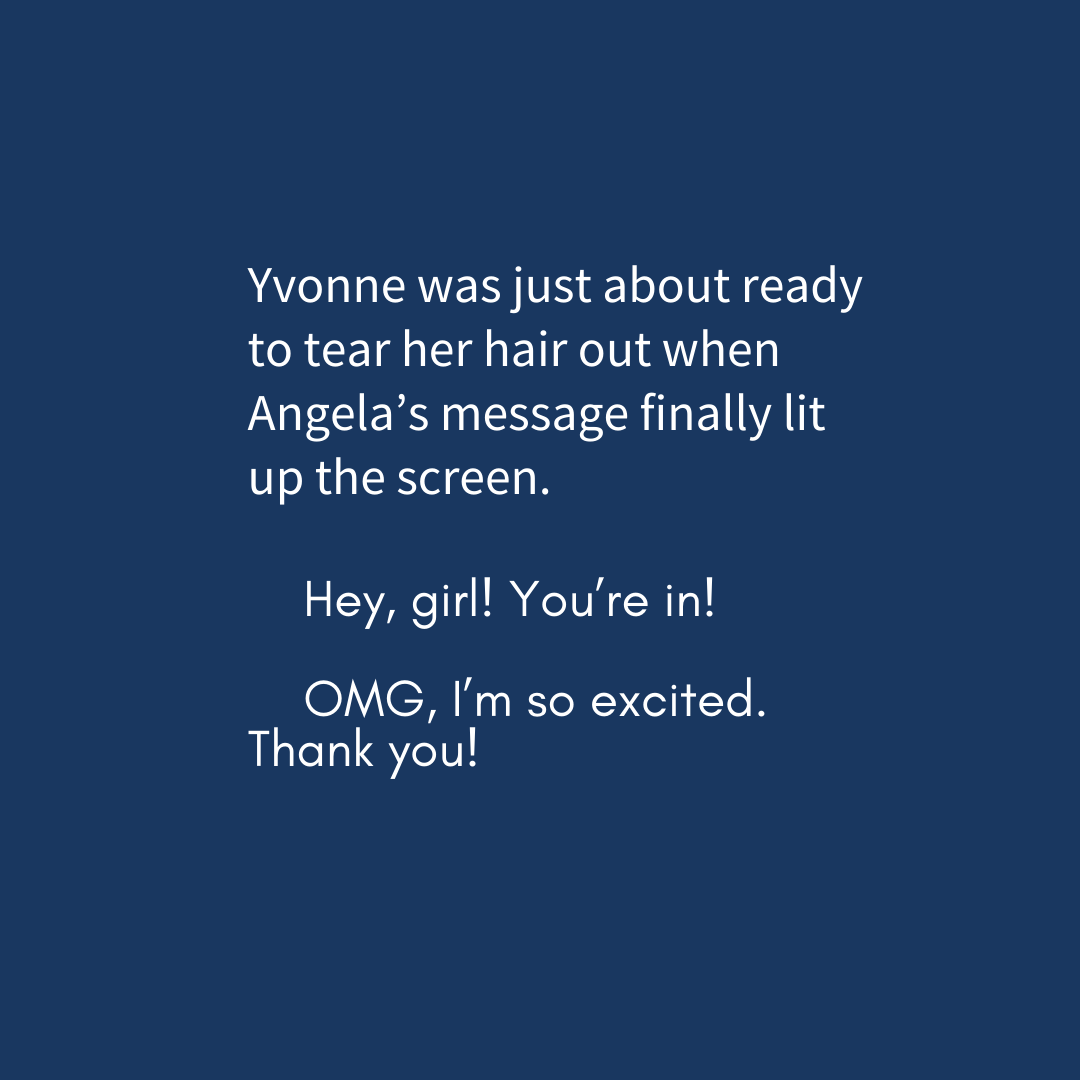
    If your characters are spending a lot of time communicating this way, you might want to use a clear visual cue to indicate a text message convo. Select a different font (a sans serif font helps to distinguish it from the rest of the copy while giving a nod to tech formatting) and set it off with indents. For example:

    tile showing text messages formatted with a different font and indents.

    Use formatting to indicate sent and received texts

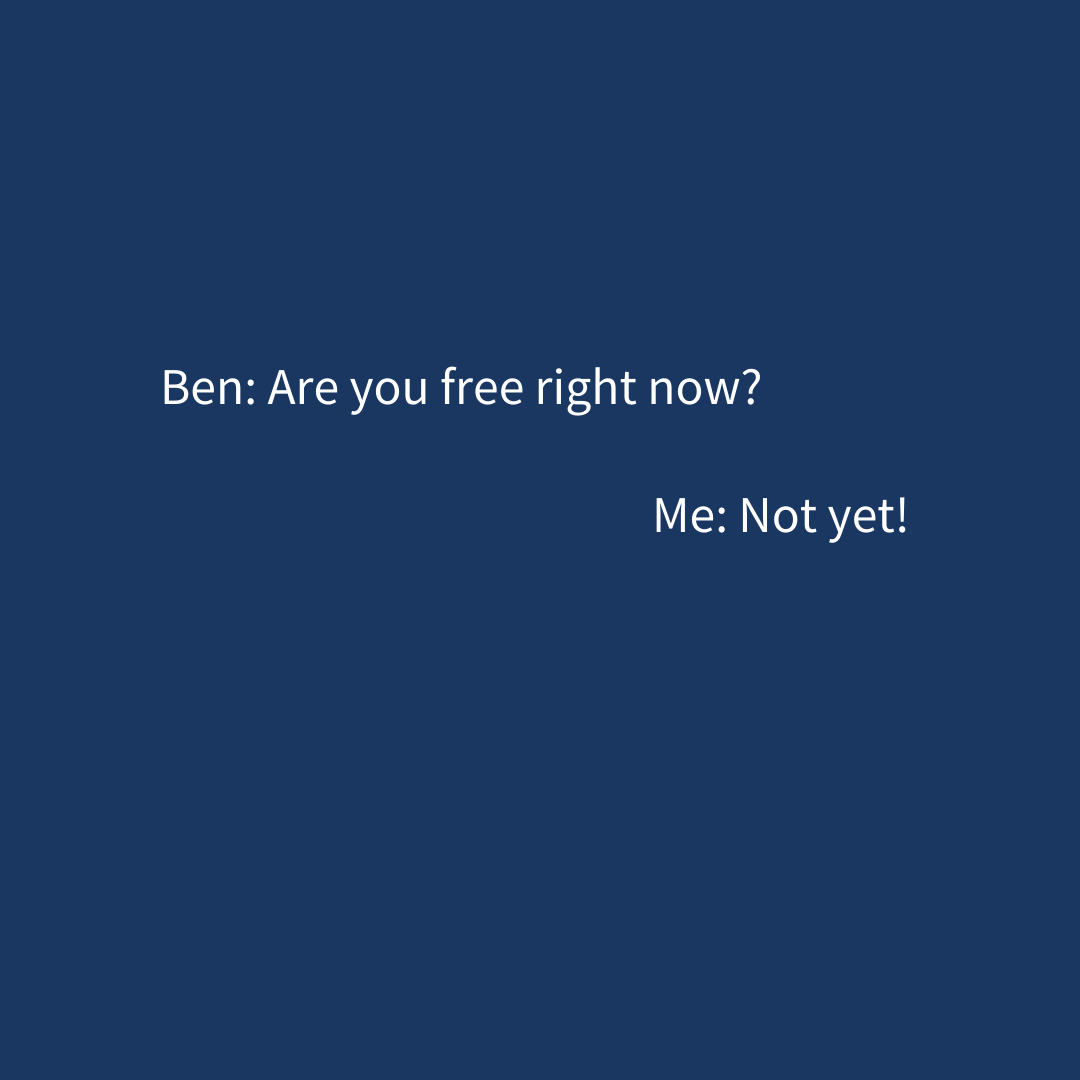
    Think about how messages are displayed on your phone. The ones you send are aligned right and the ones you receive are aligned left. Some authors are choosing to replicate this format in their works, even placing them inside speech bubbles with dates and times for an authentic look. In this style, you might want to use names to indicate speakers, as you would in a play. For example:

    A tile showing two text messages aligned left and right

    Some authors – particularly young adult authors – might even like to work with a designer or illustrator to create a graphic treatment for texts.

    How to choose?

    Your choice of style to use will depend on a number of factors, including readability and budget.

    Some questions to ask yourself include:

    • Do you have long strings of text exchanges between characters?
    • Will you ever have more than two people in a text chat?
    • If you’re using names to discern who is sending the texts, how do you imagine them being read in an audio version?
    • What age group are you writing for?
    • Are you working with a designer/typesetter who can create a special design treatment for texts?
    • Is space an issue?
    • What’s your personal preference when reading this type of dialogue in fiction?

    If you’re only using the odd text here and there, italics might be all you need. But if text messages are a critical part of your characters’ dialogue, consider using a special treatment, even if it’s just a different font.

    You might like to try out a few different styles and see how they fit, and when you decide on one, ask your beta readers to give feedback on whether your treatment of text messages is clear and enjoyable to read.

    What about emojis?

    I love a smiley/winky/smirky face as much as the next millennial, but there are caveats to using these guys. Like fonts, emojis (that is, the little pictures, not the ones created with letters) are subject to copyright, so if you’re self-publishing, make sure to buy a licence or find a free version for your work. Also bear in mind that they won’t appear in colour in your printed book, which may lessen their visual appeal and impact.

    Another thing to consider is the possibility that they will date your book. Emojis are popular now but they may be considered cringe in a few years’ time, or their meaning could shift. It’s something to keep in mind if you’re concerned about your work’s longevity in the market.

    The verdict

    As long as you’re making text messages and who’s sending them clear to your reader, there’s no real right or wrong here. I lean towards using a different font or italics to indicate text messages in fiction and weaving in some dialogue tags and action beats to keep readers on top of who’s texting at all times. If you’re working with a copy editor, you can ask them if they can set up a special style in Word for text messages when working on your book to ensure you achieve both consistency and clarity. This will ensure they’re typeset differently to the rest of your text too.

    Ultimately, I love seeing creative ways of depicting technology in fiction and I’m excited to see how this evolves on the page. Futuristic novels that use not-yet-created technology? Even more fun!

    Want help formatting your book’s text messages? Get in touch for a sample edit.

  • Introducing the vocative comma

    This tiny piece of punctuation saves lives.

    One of the best things about punctuation is that when it’s used correctly it’s invisible in plain sight. It’s like driving a road you know so well that you get home without recalling the journey.

    But when it’s misused? Those misplaced commas, semicolons and dashes can be jarring!

    The vocative comma, however, is often completely invisible. That is, writers tend to leave it out of their sentences altogether. This can have disastrous implications for your characters!

    Allow me to explain. 

    What is a vocative expression? 

    Honey, sweetheart, darling, love – your pet names for your loved ones can be a vocative; so too their actual names. Any word you use to address someone directly is a vocative (also known as a vocative expression), whether it’s kind, disrespectful or neutral. Mate, sir, madam, prime minister … the list is endless! It’s how you use it that matters.

    For instance, in the sentence, “Hey, you!”, you is the vocative expression because that’s the word used as a direct address.

    Although you might not hear it in your speech, a comma is needed with a vocative expression in writing. In fact, it’s an incredibly powerful piece of punctuation.

    Consider the difference between these sentences: 

    “Shoot Pete,” the policeman cried. 

    “Shoot, Pete,” the policeman cried. 

    In the first example, without the vocative comma, Pete’s life is in grave danger! In the second, a vocative comma saves his life, showing us that the policeman is, in fact, directing Pete to shoot someone or something. 

    Similarly, the below sentence can take your story in a wild direction without a vocative comma: 

    “Eat children!” the woman urged. 

    Unless your story is exploring cannibalism, you’re going to need a comma with that: 

    “Eat, children!” the woman urged. 

    The comma makes it clear that the woman wants to feed the children, not feed on them.

    At its simplest, the vocative comma offers instant clarity. For example:

    “I don’t know Alison,” said Judy.

    has a completely different meaning to:

    “I don’t know, Alison,” said Judy.

    How to use the vocative comma

    Where you place the vocative comma depends on where the vocative expression lands in the sentence. 

    If the vocative expression starts the sentence, you need a comma after it (the vocative and its comma are in bold): 

    Kate, bring me that file,” Alice ordered. 

    Simone, is that your new bike?” Fred asked.

    If the vocative expression arrives at the end of the sentence, use the comma before the vocative. 

    “Give me my bag, you thief,” Ann said.

    “Where did you get that cool shirt, bro?” James asked.

    If the vocative expression is placed in the middle of the sentence, it needs commas before and after it. 

    “Well, Pete, you shouldn’t have fired that gun,” the policeman said.

    “Hello, darling, would you like a cup of tea?” Jenni offered.

    When does a vocative expression not need a comma?

    You don’t need a comma when the vocative expression is standing alone. Instead, you need a full stop, an exclamation mark, or a question mark. Here are some examples. 

    Pete! The policeman told you to shoot!” cried Mark. 

    Darling? Are you there?” Jenni called. 

    You thief. Bring me that bag,” Anna snapped.

    Embracing the vocative comma

    It can be easy to miss this one when you’re in the flow of writing, and in many cases most people will understand what you mean when you fail to add a vocative comma. It’s not actually life or death!

    But, using the vocative comma is a good habit to get into. Firstly, using punctuation correctly makes for clearer sentences and a seamless experience for your reader, allowing them to fully immerse in your world. And secondly, if you’re working with an editor, getting these little details right will save them time and you money.

    So, keep the vocative comma in mind when you’re polishing your manuscript – and see if you save any lives while you’re at it.